
Pure Montessori Education.
The early years at Ardee are grounded in authentic Montessori practice, guided by Dr. Maria Montessori's principle of the planes of development. Each child is supported to learn at their own pace, engaging with carefully prepared materials that encourage independence, concentration and a genuine love of learning.
A century of evidence.
Dr. Maria Montessori was a physician before she was an educator. The first Casa dei Bambini, the Children's House, opened in Rome in 1907, and the method that grew from it rests on a single observation that she repeated across cultures and decades: given a carefully prepared environment and the freedom to work within it, the young child builds intelligence, character and self-discipline from the inside. Her principle of the planes of development describes childhood as a sequence of distinct stages, each with its own sensitivities and its own way of learning.
The first plane, from birth to about six years, is the period of the absorbent mind. The child does not study the world; the child absorbs it, taking in language, movement, order and culture through direct experience. Everything in a Montessori House is arranged in response to this fact. Materials are real and precisely made. Furniture is scaled to the child. Time is given in long, uninterrupted stretches. The adult observes first and intervenes last.
In 1929 Dr. Montessori founded the Association Montessori Internationale (AMI) to protect the integrity of her work. The Ardee Montessori Houses use internationally standardised Montessori apparatus and follow the method as she set it down, without dilution: the "Pure Montessori" of the Ardee continuum.
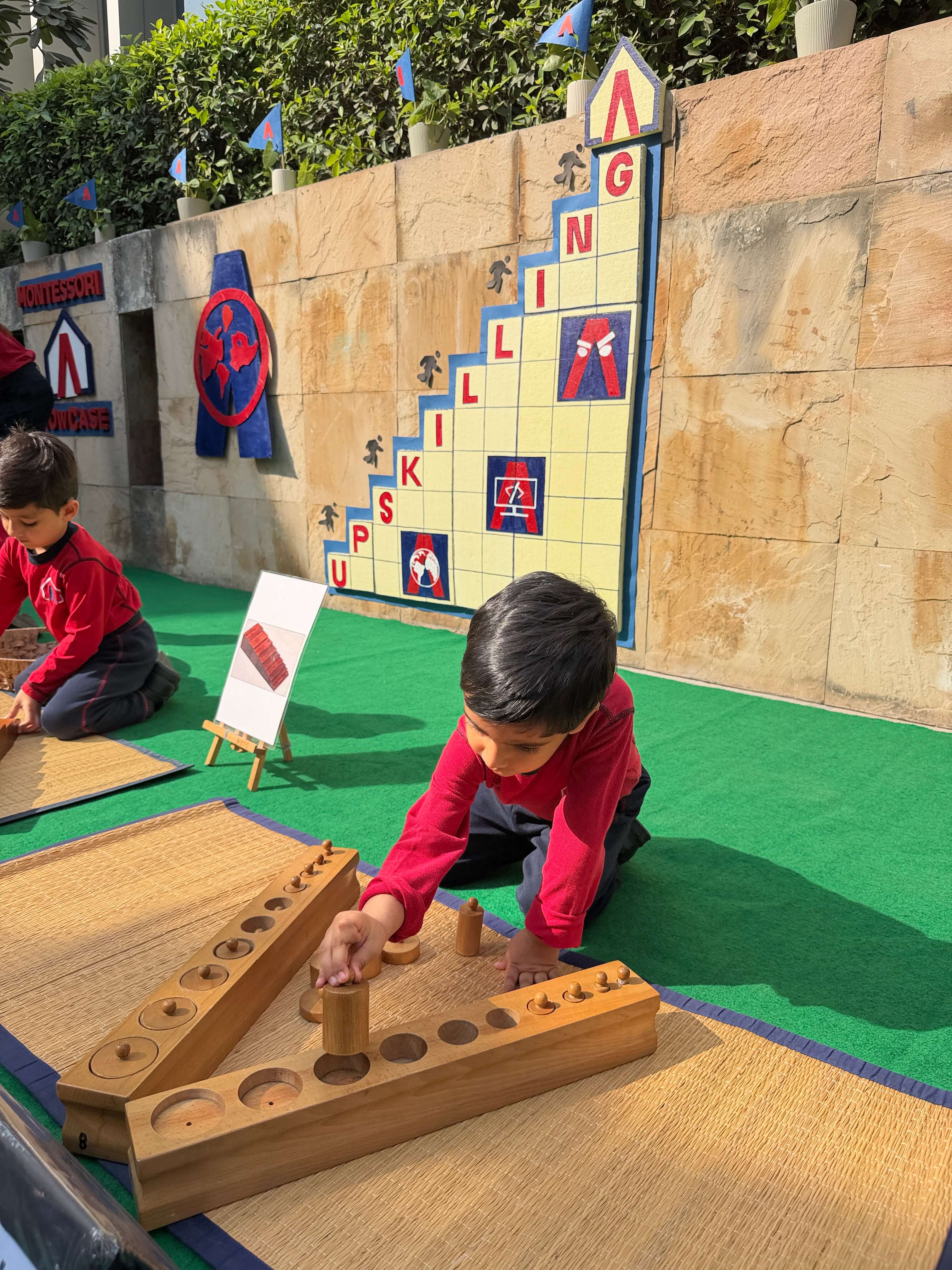
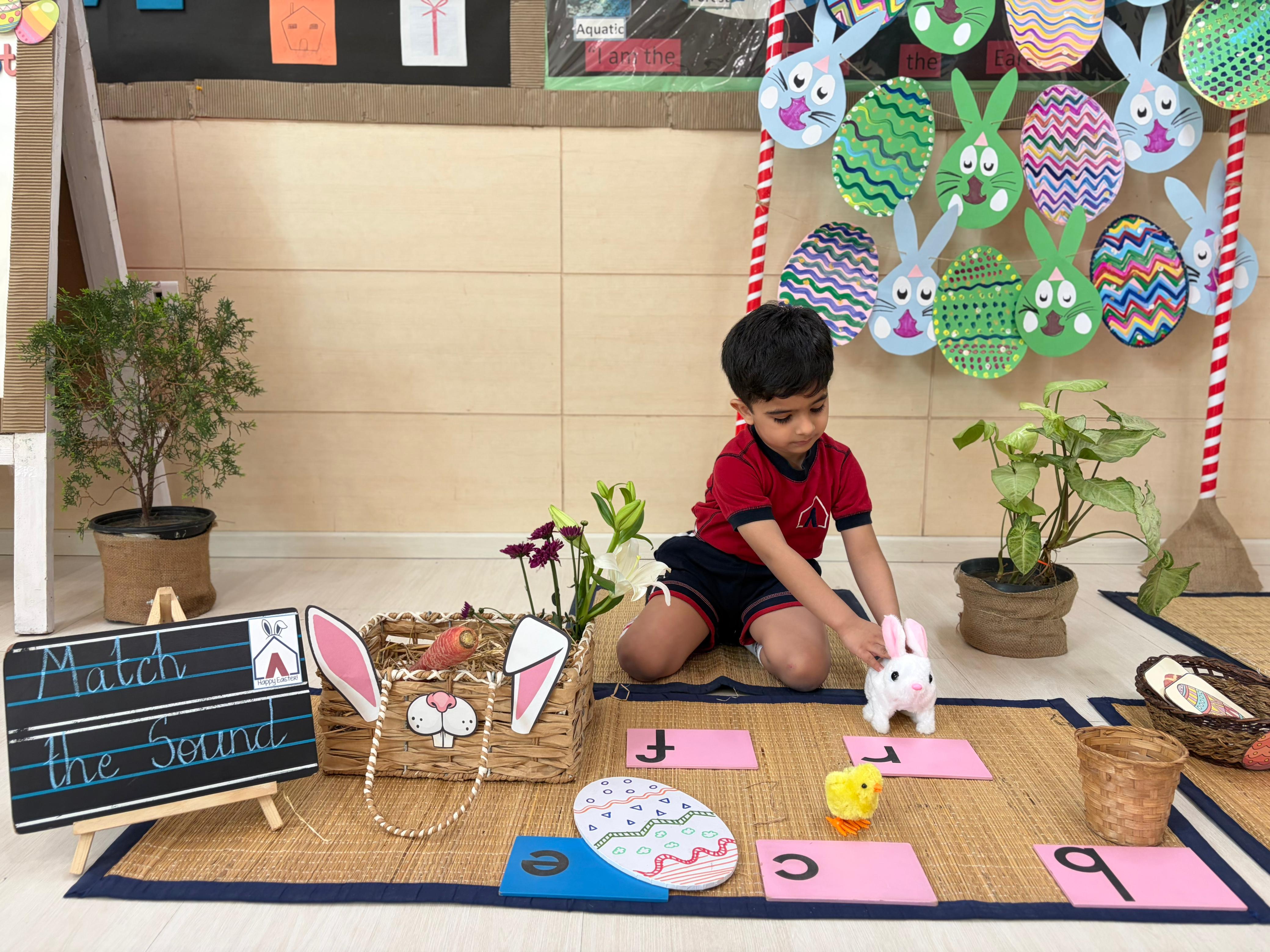
Every object has a purpose.
Authentic Montessori apparatus invite children to learn through their senses, refine perception, and make abstract ideas concrete. Each material has a clear purpose and supports hands-on discovery.
Guidance, not instruction.
Ardee calls its teachers mentors, and in the Houses the word is exact. Our trained and certified Montessori educators guide each child with patience, deep observation, and a thorough understanding of early-years development. They support growth through gentle guidance rather than instruction: a presentation is given once, precisely and slowly, and then the child is left to work.
The mentor's task is to connect each child with the material best suited to that moment of development, to protect the child's concentration once it has begun, and to record what is observed. Mentors across the Ardee Schools are prepared through the Ardee Montessori Teacher Training Centre, which trains educators in Montessori philosophy, child psychology and contemporary classroom practice, rooted in observation, reflection and hands-on learning.
Mentors are appointed for their depth of knowledge, strength of character, and their ability to inspire intellectual curiosity and high standards of achievement.
The Ardee Schools, on the appointment of mentors
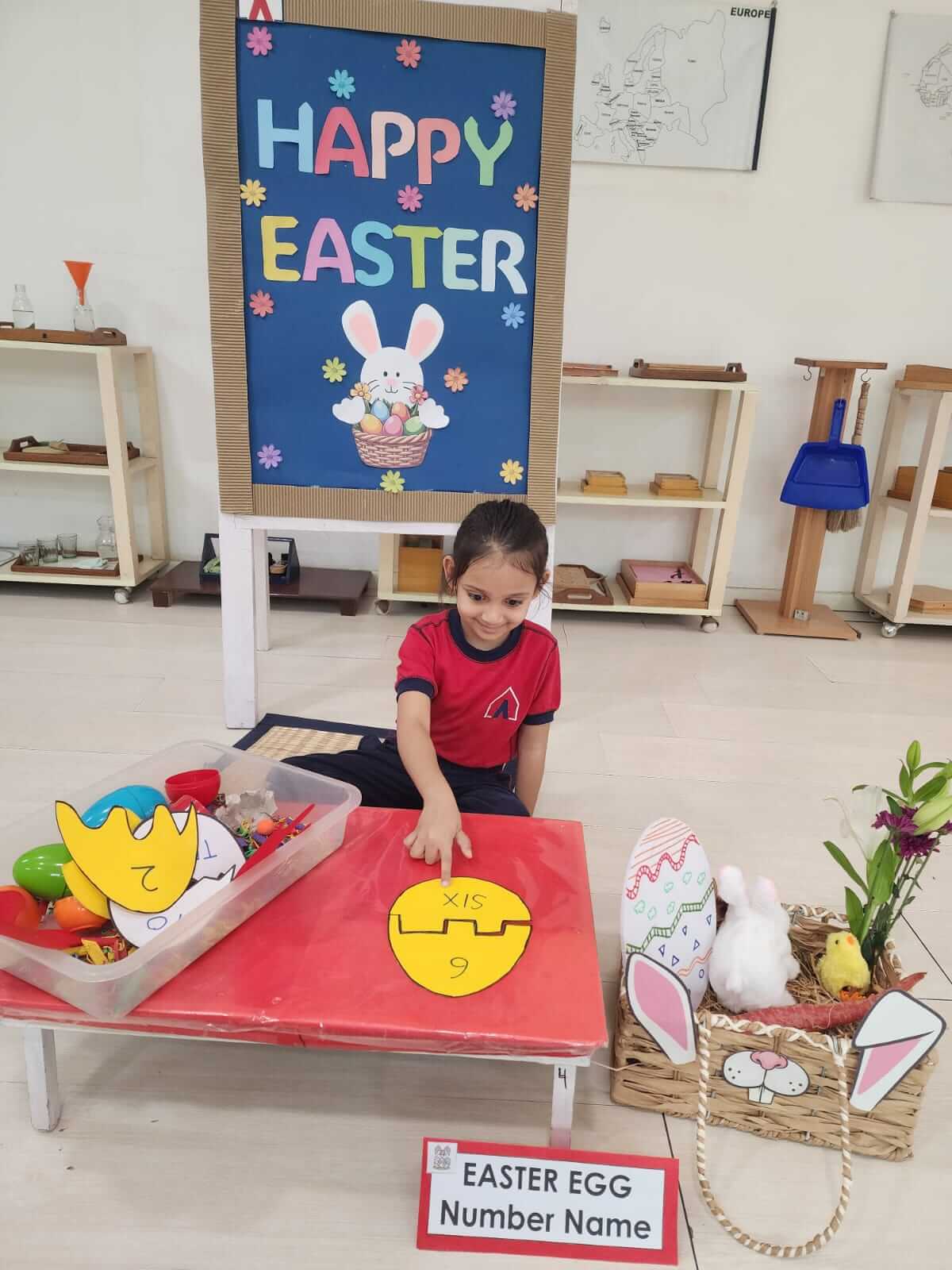
Practical life to cultural subjects.
The programme spans practical life activities, sensorial education, cultural subjects, mathematics and language arts, with performing arts, mindfulness and grace and courtesy lessons woven through the day.
Practical life
Pouring, spooning, buttoning, polishing, preparing food and caring for the environment: real tasks with real tools, through which the child builds coordination, concentration, order and independence.
Sensorial education
The pink tower, the brown stair, the colour tablets and the sound cylinders isolate one quality at a time so that the child can classify the world by size, weight, colour, texture and sound.
Language arts
Spoken language is enriched daily; sandpaper letters give the sounds a shape; the moveable alphabet lets a child compose words long before the hand can write them.
Mathematics
Number rods, spindles, the golden beads and the bead chains make quantity, symbol and operation concrete, so that abstraction arrives as a discovery rather than a rule.
Cultural subjects
Geography, botany, zoology, history and the arts, presented through puzzle maps, nomenclature cards and living things, so that the child's understanding of the world grows outward from the environment.
Performing arts, grace and courtesy, mindfulness
Music and movement, the daily lessons of grace and courtesy, and moments of mindfulness are part of every environment, not additions to it.
How progress is understood.
A Montessori House has no examinations and no marks. Progress is understood through observation: what a child chooses, how long concentration lasts, which presentation the child is ready for next, and how the child treats the environment and the people in it. The mentor's daily notes are the record of the child's development.
Families share in this record. Photos, updates and classroom observations reach parents through the daily parent communication app, and the House invites parents to see the environment for themselves through school tours, both virtual and in person.
Children are free to choose their work, to move about the environment and to work for as long as concentration lasts. The limits are equally real: respect for the material, for the work of others and for the community. Self-discipline emerges from this balance, not from external reward or correction. In the words of the Houses' own mission for the Children's House environment, the House strives to foster self-discipline through the opportunity to exercise freedom appropriate to the child's developing sense of responsibility.
Where the method meets the Ardee way.
Six commitments from the prospectus describe what the Ardee Montessori Houses hold themselves to in every environment.
Certified Montessori educators
Trained and certified mentors who guide through observation and gentle guidance rather than instruction.
Sensorial learning materials
Authentic apparatus that invite children to learn through their senses and make abstract ideas concrete.
A strong focus on independence
From simple choices to meaningful self-care tasks, children build confidence, discipline, and ownership of their actions.
Social and emotional learning
Grace and courtesy, mindfulness, and emotional expression woven into daily routines.
Parent communication via app
A transparent bridge between home and the House that supports shared understanding and builds trust.
Peace education
Peace lived daily through calm environments, respectful relationships, and purposeful work.
Montessori work, mapped to the Early Years Foundation Stage.
In the final year of the House, Montessori work is mapped to the Early Years Foundation Stage (EYFS), the framework that describes what young children should experience across three prime areas of learning and four specific areas. The prime areas are communication and language, physical development, and personal, social and emotional development. The specific areas are literacy, mathematics, understanding the world, and expressive arts and design.
The mapping changes nothing about the method. The materials, the work cycle and the mentor's role remain those of the Montessori environment; the framework gives families and the primary school a shared language for what the child has achieved, and it forms the bridge to Cambridge Primary at The Ardee School.
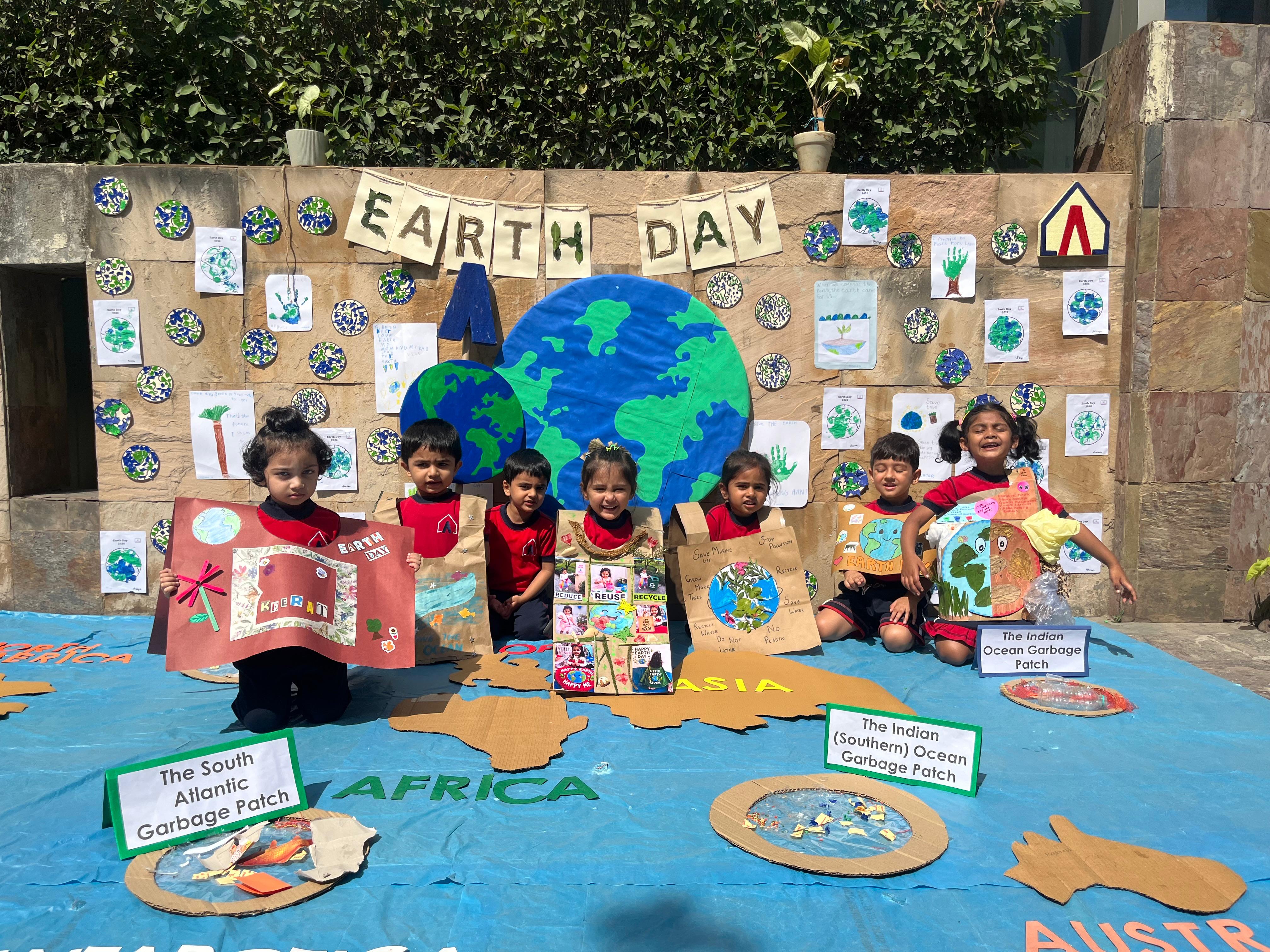
See the method at work.
The environments page describes each community by age; the day page walks through the rhythm of a morning.